At a Glance
Best For
Overview
The Miller Thunderbolt 160 sits at an awkward price point on paper — $549 for a stick-only welder when the same money buys a multi-process inverter from a half-dozen Chinese brands. So why does this machine keep showing up on every 'best stick welder for home shops' list? Three reasons that don't show up in spec tables: Auto-Line input flexibility, Fan-On-Demand cooling, and Miller's parts and service network.
If you're laying down occasional bead on farm gates, building a smoker rack, or running through a stack of 7018 to learn proper technique, you could absolutely get there with a $200 inverter stick. The Thunderbolt 160 isn't for that buyer. It's for the welder whose machine needs to plug into whatever outlet is closest — 120V in a residential garage one day, 230V at a friend's shop the next, 460V three-phase at a worksite. Auto-Line eliminates the input voltage guesswork entirely. You plug in, you weld.
At 30 lbs it's heavier than newer inverter-based sticks (the Lincoln Power Arc 200ST sits closer to 20 lbs), but the trade-off is reliability. Miller's transformer/inverter hybrid design has decades of field validation. Repair parts are stocked at every welding supply in the country. This is the welder you buy because you don't want to think about it for the next 15 years.
Pros & Cons
Pros
- Auto-Line technology works on any input voltage 120–460V
- Fan-On-Demand keeps it cleaner and quieter
- Miller's legendary build quality and support network
- Simple 2-knob interface — dial in amps, weld
Cons
- Stick/SMAW only — no MIG or TIG capability
- 160A max limits thickness on thicker structural steel
- Heavier than comparable inverter sticks at 30 lbs
Miller Thunderbolt 160 Stick Welder
Prices may change · Free shipping with Prime
Auto-Line Technology and What It Actually Does
Auto-Line is Miller's marketing name for what's technically a wide-input-voltage power supply. The Thunderbolt 160 accepts anything from 120V single-phase up to 460V three-phase without you flipping switches, swapping plugs, or wondering if you're going to fry the inverter. The machine senses the input and adjusts internally.
In practical terms, this matters most for tradesmen and farmers who weld in multiple locations. A welder who runs a single bench in a garage with one outlet doesn't need Auto-Line. A pipeline welder, a mobile farrier, or a farmer with welds happening in the barn, the shop, and the field is exactly the buyer this feature was built for.
The secondary benefit is voltage tolerance. Rural areas with under-spec wiring or generator power sometimes deliver dirty 110V that sags below 100V under load. Auto-Line handles that without arc instability. A cheaper inverter stick will sometimes hiccup at 95V input; the Thunderbolt 160 keeps welding.
Duty Cycle, Amp Range, and Real-World Performance
Spec sheet says 40% duty cycle at 90A. That means in any 10-minute window, you can weld at 90 amps for 4 minutes before the thermal protection forces a cooldown. For comparison, the Lincoln K1170 AC/DC sits at 25% at 90A. The Thunderbolt 160 gives you noticeably more arc-on time before needing a break.
Amp range is 10–160A, with the bottom end being the genuinely useful part. Low-amp stick work — running 1/16" rod on thin sheet, repairing small castings, hardfacing — needs precise low-end control. Most budget sticks have miserable arc stability under 50A. The Thunderbolt 160 strikes and holds an arc at 20A cleanly, which is rare at any price point under $1,000.
At 160A max with a 3/16" thickness rating, you're not building bridges. But you can run 1/8" 7018 all day, weld 3/16" plate single-pass, and handle most farm and shop repair work without thinking about it. For thicker structural steel — anything above 1/4" — you'll be multi-passing, which the duty cycle handles fine.
Who This Welder Is For (and Who It Isn't)
Buy the Thunderbolt 160 if you're a serious hobbyist or working professional who needs a stick welder that will run for 15+ years across multiple shops, multiple outlets, and a thousand kinds of repair work. Farmers, ranchers, ironworkers' personal shops, mobile maintenance guys — this is the right tool.
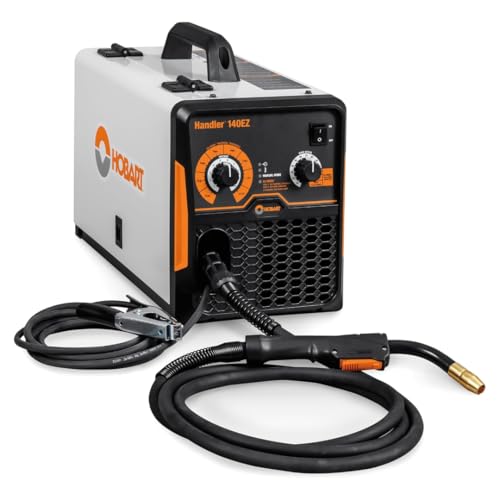
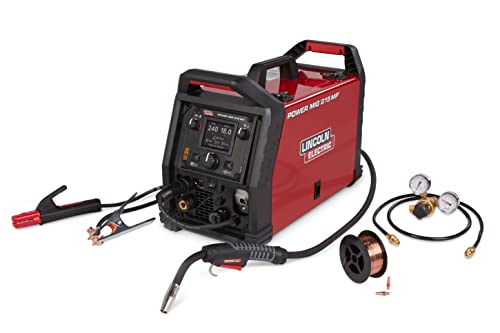
Don't buy it if you're learning to weld with no specific use case in mind. A new welder is better served by a multi-process inverter (Hobart Handler 140 or Lincoln Power MIG 210 MP) where you can also try MIG and TIG. Stick is the hardest process to learn first; starting with MIG and adding stick later is the easier path.
Also don't buy it if portability matters more than longevity. A 30-lb welder isn't going up and down ladders comfortably. Battery-powered or sub-20-lb inverter sticks are better for that use case. The Thunderbolt 160 belongs on a cart or a bench.
What You'll Outgrow (and What You Won't)
You will outgrow the 160A max output if your work pushes into structural fabrication, heavy farm equipment repair, or anything in 1/4"+ thicknesses where you'd rather single-pass than multi-pass. The natural upgrade is the Miller Thunderbolt 210, which adds 50A of headroom.
You will outgrow stick-only if you find yourself wanting to weld thin sheet metal (under 1/8"), aluminum, or anything where the cleanup of stick spatter and slag isn't acceptable. MIG and TIG both have appropriate use cases that stick simply can't reach.
You will NOT outgrow the build quality or the Auto-Line feature. These are the parts of the machine that justify the price premium over budget alternatives. A new welder bought today will still be the secondary stick welder in your shop in 2040 — useful, reliable, sitting next to whatever multi-process machine you've moved up to.
Alternatives Worth Considering
If $549 is over budget, the Forney Easy Weld 261 ($249) is the honest budget choice. It's a 140A inverter stick that runs on 120V/230V, weighs 12 lbs, and works fine for occasional home use. You give up Auto-Line, the build quality, and the dealer network. For someone welding once a month on a hobby project, that's the right trade.
If you want stick AND TIG without going multi-process, the Lincoln Square Wave 200 ($1,299) is the industry-standard choice. It does AC/DC TIG cleanly, supports aluminum, and includes stick mode. The price jump is significant, but if TIG is in your future, skipping straight to a Square Wave saves you buying twice.
If Miller specifically appeals to you but you want more capability, the Miller Multimatic 220 AC/DC ($3,500) is the do-everything machine. MIG, TIG (AC and DC), stick, flux-core, in one box with Miller build quality. It's three times the price of the Thunderbolt 160 and three times the capability. Different machine, different buyer.
Our Verdict
The Thunderbolt 160 is the benchmark entry Stick welder for home shops. Miller's Auto-Line input flexibility means it runs on any outlet you have — workshop, farm, or garage. If you're starting with Stick and want it done right the first time, this is the one.
Miller Thunderbolt 160 Stick Welder
$549
Prices may change · Free shipping with Prime
| Full Specifications | |
|---|---|
| Process | Stick (SMAW) |
| Amp Range | 10–160A |
| Max Amps | 160A |
| Duty Cycle | 40% @ 90A |
| Input Voltage | 120/208/230/460V |
| Wire/Rod Gauge | 6010, 6011, 6013, 7018 |
| Max Metal Thickness | 3/16 in |
| Weight | 30lbs |
| Auto-Set | No |
| Spool Gun Ready | No |
| Warranty | 3yr |
| Brand | Miller |
Frequently Asked Questions
Can the Thunderbolt 160 weld with 7018 rod?
Does Auto-Line really mean I can plug it into any outlet?
How does the Thunderbolt 160 compare to the Lincoln K1170?
Is 160 amps enough for 1/4 inch steel?
Related Buying Guides
Compare With Similar Welders
Lincoln Electric
Power MIG 210 MP
MIG / TIG / Stick / Flux-Core · 210 A · 40% @ 150A
$949
Head-to-Head Comparisons
Miller Thunderbolt 160 Stick Welder
$549
Prices may change · Free shipping with Prime